



![]() |
|||||||||||||||||
![]()
|
|||||||||||||||||
DOCUMENTS |
|||||||||||||||||
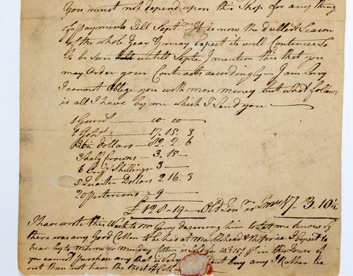
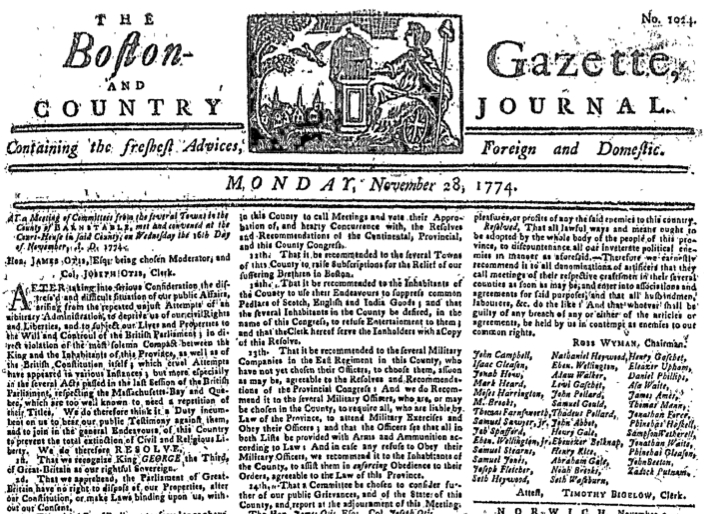
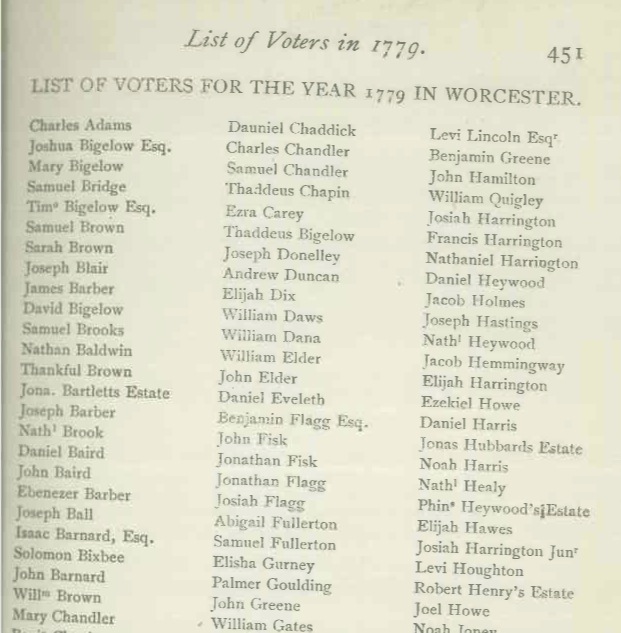
Our investigation of history depends on which stones we wish to overturn. Research for The First American Revolution revealed several little noticed documents of great historical import. In hopes of giving these more exposure, some are reproduced here. They might serve well as teaching tools. This page is a new and evolving project.
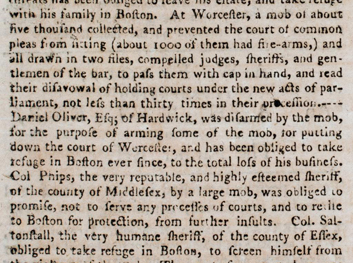
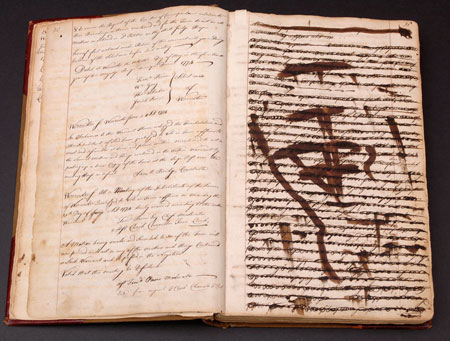
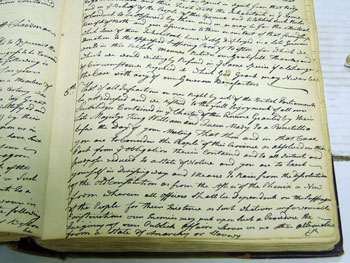
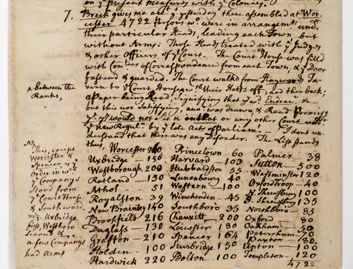
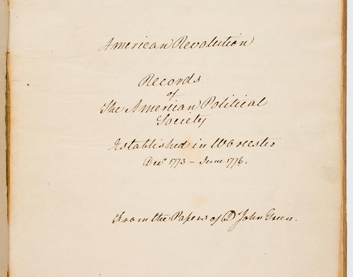
COMING SOON (with any luck) Reproduction of the following documents is pending approval by the various repositories. 4,622 Worcester County militiamen cast off British rule seven months before Lexington and Concord On September 6, 1774, 4,622 militiamen from 37 town across the Worcester County – half the adult male population of the entire county – lined both sides of Main Street as two dozen court officials walked the gauntlet between them, hats in hand, reciting their recantations thirty times each so all the militiamen could hear. From that day onward, no British authority was ever exerted in Worcester County. How do we know these numbers? Breck Parkman, one of the militiamen from Westborough, took a tally, and his father Ebenezer Parkman entered them in his diary the following day. Thanks to this invaluable source, housed at the American Antiquarian Society, we know not only the numbers but also the positioning of the 37 companies as they lined the street. The Parkman diary contains an interesting account of the September 2 Powder Alarm mobilization, also to be reproduced here, pending permission and assistance from AAS. For a detailed rendering of the September 6 event in Worcester, complete with Parkman’s listing of the numbers from each town, see First American Revolution, 130-138; for a briefer version, see Founders, 143-146, or Revolutionary Founders, 43-45. The Powder Alarm narrative appears in First American Revolution, 112-130. The 1774 Revolution in Worcester – evidence from a merchant Through the summer of 1774, as they prepared for an expected confrontation with British soldiers, how did the Worcester men get their guns and powder? And on September 6 and 7, as great numbers from across the county converged in the “shiretown,” how were they supplied with drink and sundry necessities? The letters of merchant Stephen Salisbury to his brother Samuel in Boston, also a merchant, are revealing. Reproduction of these letters depends on approval and assistance from the American Antiquarian Society. The 1774 Revolution in Massachusetts – an opposition perspective Jonathan Judd, Jr., a conservative shopkeeper, tracked the progress of a movement he disdained. His cantankerous observations in his diary add another dimension to the momentous upheaval. “Confusion is coming on inevitably,” he wrote on August 29. On September 31, in response to the court closure in Springfield: “all opposition was in vain every Body submitted to our Sovereign Lord the Mob.” Finally, on September 7 he noted disdainfully: “Government is now devolved upon the people, and they seem to be for using it.” For Judd’s comments and their context, see First American Revolution, 95-103, 168, 239, 240. The West takes the lead According to the standard narrative, Boston lead and others followed. This might have been true prior to 1774, but in response to the hated Massachusetts Government Act, which effectively disenfranchised the entire population of the province, revolution spread from west to east. On July 25 the Committee of Correspondence from Pittsfield, in the westernmost county of Berkshire, told the Boston Committee of Correspondence it intended to close the courts and asked for the Boston Committee’s “thoughts” on that idea. Six days later the Boston committee replied: “We acknowledge ourselves deeply indebted to your wisdom… Nothing in our opinion could be better concerted than the measures come into by you County to prevent the Court’s sitting.” On August 15, the Worcester Committee of Correspondence, writing to the Boston Committee, first suggested a multi-county meeting to help coordinate the various resistance efforts. The Boston committee assented, and it was that convention that made the call for a Provincial Congress, to convene in October. Worcester had good reason to take the lead. General Thomas Gage, the military governor, was threatening to march his soldiers there, and Worcester might need assistance from its neighbors. For these letters see First American Revolution, 65, 82, 237. The letters are housed at the New York Public Library and will be reprinted if permission is granted. Worcester’s American Political Society – a Revolutionary political club On January 3, 1774, in the aftermath of the Boston Tea Party, thirty-one men from Worcester, solid members of their community but not the wealthy and well-connected, founded the American Political Society (APS), a radical caucus that met in advance of town meetings to plot strategies, determine agendas, and put forward candidates for public office. While the Committee of Correspondence, as a public body, reported back to the town as a whole, the APS, avowedly partisan from the outset, could do and act as it pleased. Within a year, membership in the organization would grow to 71, almost one-third of the enfranchised citizens of the town. Since these men could be counted upon to show up at every town meeting, effectively insuring a majority, the APS became in effect a shadow government. Minutes of the APS are housed at the American Antiquarian Society. Possibly, with permission and assistance, they could be digitized and presented here or elsewhere.
|
|||||||||||||||||