
 |
|
|
|
|
 |
 |
 |
 |
|
BIO
 |
 |
 |
 |
 |
 |
 |
 |
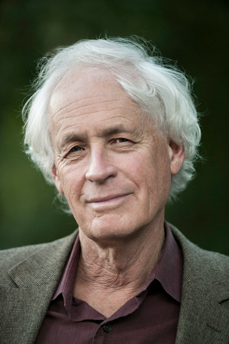
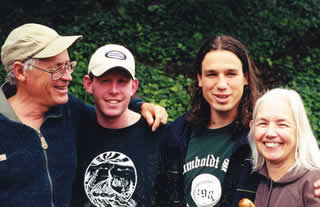
Ray Raphael, born in 1943 and raised in New York City, headed west the day after graduating Fieldston high school. During the 1960s he was active in the civil rights and anti-war movements. His work included voter registration and integration of public facilities in North Carolina (summer of 1962), Mississippi Freedom Summer (1964), and the “Assembly of Unrepresented People” in Washington DC (1965), the initial attempt to link the civil rights movement with opposition to the War in Vietnam. In 1971, after three years of secondary teaching in San Francisco’s newly formed Urban School, Ray homesteaded in the hills of Northwest California. That is where Ray and his wife Marie raised their two sons, Nick and Neil. He taught a comprehensive one-room high school in their remote community as well as evening classes at the local community college, and he authored several books on regional history and contemporary issues. (See “Writing Career” page.) In the early 1990s, while preparing United States history curricula, Ray became keenly interested in the history of common people during the American Revolution. Recalling the grassroots nature of the civil rights movement, he viewed the Revolutionary War from a “bottom-up” perspective as well. Aided by a year-long grant from the National Endowment of the Humanities, he traveled to Eastern archives to investigate: “How Revolutionary Was the American Revolution?” Since that time, he has focused on our nation’s founding, with a particular emphasis on how historical narratives are created. He has written ten books on the Founding Era, co-edited another, and serves as an associate editor of the online Journal of the American Revolution. |

In 2003 Nick Raphael, a budding environmental forester, was killed in a car crash at the age of 26. In his memory, Marie and Ray started “Nick’s Interns,” a program that gives summer work to teens in restoration forestry. Since NI’s inception, some 300 youngsters have followed in Nick’s footsteps, enriched by the experience of enriching their local environment.
Raphael’s most recent book, A Life in History, places his own life in historical perspective. From the jacket copy:
“For half a century, in 20 books, Ray Raphael has explored societal and historical themes by highlighting the experience of unsung individuals, from Revolutionary War farmwives to backcountry woodsmen in California. Their lives were shaped by forces at play in a particular epoch. Now, at age eighty, Raphael surveys the forces that shaped his life—the civil rights and anti-war struggles of the 1960s, the back-to-the-land migration of the ’70s, and the more recent insistence by marginalized groups and historians for inclusive and honest narratives of our nation’s founding. ‘I would not be ‘me’ if born into a different society or at a different time,’ he writes. ‘We each navigate public spaces, affected by our surroundings and in turn leaving our marks.’ Perhaps, upon reading what he records, you will probe your own ‘life in history.’”
Published books:
See Booklist.
Educational Background:
BA, Reed College, 1965 (Phi Beta Kappa)
MA, University of California,
Berkeley, 1967 (Woodrow Wilson Fellowship)
MAT, Reed College, 1968 (Inner-city
Fellowship)
Teaching experience:
1967-1968: Jefferson High School (Portland, OR)
1968-1971: Urban School
of San Francisco
1974-1977: Urban School of San Francisco (part-time)
1978-1995: College of the Redwoods (adjunct)
1979-1997: Whale Gulch School,
Leggett Valley Unified School District (grades 7-12)
1997-2000: Humboldt State University (teacher education, fieldwork supervisor)
Courses taught at the college level: United States history (all components), California history, Humboldt County history, Native American studies, critical thinking, and multi-cultural education. Courses taught at the secondary and middle school levels: United States history, world history, English, algebra I and II, geometry, basic math, natural science, physical science, civics, economics, global studies, geography, anthropology, folklore, critical thinking, forestry, and physical education.
Awards and recognition:
Elected to Phi Beta Kappa, 1965
Woodrow Wilson Fellow, 1966-1967
Inner-City Fellow, 1967-1968
Commonwealth Club of California award for the
best book of the year about California, 1974 (An Everyday History of Somewhere)
National Endowment for the Humanities Fellow, 1995-1996
Gilder-Lehrman Research Fellow, 2005
Bay State Legacy Award, Massachusetts Humanities Council, 2013
American Antiquarian Society, elected member
 |